Showing posts with label France. Show all posts

Saturday, January 6, 2024

Chocolate Evolution in France

The earliest signs of domesticated cocoa were discovered in the containers and pots of the Mayo-Chinchipe people in the upper Amazon region of Ecuador.

In 1615, the momentum for introducing chocolate to France was driven by the efforts of Anna of Austria, a Spanish princess who brought chocolate drinks to the French court upon marrying King Louis XIII. Anna even included her maid Molina in the process of preparing the queen's cocoa drink.

A century later, Louis XV developed a notable fondness for chocolate, occasionally crafting his own hot chocolate in the kitchens of his Private Apartments. His mistresses, including Mme Du Barry, also valued the exotic beverage for its aphrodisiac qualities. Concurrently, the invention of the first chocolate-making machines led to the establishment of specialized workshops in Paris.

Chocolate transformed into a symbol of status and a fashionable beverage among the Parisian aristocracy, subsequently spreading to the upper echelons of European society. Valued for its fortifying, aphrodisiac, and energizing attributes, hot chocolate gained popularity over the centuries, especially during the Industrial Revolution.

Despite its ascent to prominence, not everyone enjoyed the flavor of chocolate. In fact, one pope declared that it could be consumed during fasting periods due to its disagreeable taste.
Chocolate Evolution in France

Thursday, December 30, 2021

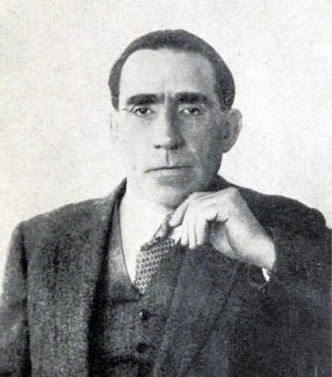
Louis Renault – French industrialist and pioneer of the automobile industry

Louis Renault (February 12, 1877 —Oct. 24, 1944, Paris) was born in Paris, He was a manufacturer who built the largest automobile company in France.

His father Alfred had left Saumur, a small town in western France to open a dry-goods business in Paris, manufacturing fabric and buttons, in 1859. Renault did poor in school and later he converted his family’s country home garden shed into his first workshop.
Renault built his first automobile in 1898. He demonstrated the advantages of this motorcar by driving up steep Rue Lepic. The vehicle performed so convincingly that his friends immediately pledged funds to the venture, placing orders for twelve copies of the Voiturette. Renault’s’ brother Fernand and Marcell also decided to back-up Louis and together they established Société Renault Fréres in early 1899.

He together with his brothers Fernand and Marcel later built a series of small. Renault vehicles attracted much attention and they winning numerous road races. When Marcel was killed during a Paris-Madrid run in 1903, it marked the end of intercity races, and convinced Louis Renault to give up motor sports.

During WWI, France government commissioned Renault AG to build airplane engines, ammunition, and the vital FT–17 tanks. The company continued to increase production volume and after the war extended the production to include farm equipment, marine and industrial machinery, and diesel motors.

His continued production of military equipment under the German occupation in World War II. He argued that "by continuing operations he had saved thousands of workers from being transported to Germany". In 1944 he was arrested and put in jail for his business collaboration with France's pro–Nazi Vichy puppet government during WW II. He died in custody while awaiting trial; the Renault company was subsequently nationalized.
Louis Renault – French industrialist and pioneer of the automobile industry

Sunday, October 10, 2021

French Renault S.A in history

In February 1899 Renault was created by The Renault brothers (Louis, Marcel and Fernand) assisted by two friends (Thomas Evert and Julian Wyer). Louis Renault was born in Paris on February 12, 1877.

Following preparatory studies at Ecole Monge, Louis failed the entrance exam for the elite national engineering school, Ecole Centrale. He seized the opportunity to indulge in his passion for machines.

In the autumn of 1898, upon his return from military service, he built his first little car or Renault Voiturette, equipped with an original “direct drive” transmission system. The system of chains and belts that earlier builders had used to transfer energy to the wheels was replaced by a gearbox and differential, directly linked to the rear axle by a crankshaft and two universal joints. It was an elegant solution, typical of Louis Renault.

Renault Voiturette was the first ever produced automobile. It was designed by Louis Renault and manufactured between 1898 and 1903. The name was used for five different models.

On December 24, 1898, at a Christmas party in Montmartre, Louis demonstrated the advantages of this motorcar by driving up steep Rue Lepic. The vehicle performed so convincingly that his friends immediately pledged funds to the venture, placing orders for twelve copies of the Voiturette.

He and his brothers Fernand and Marcel then built a series of small cars and formed the automobile firm Renault Frères (“Renault Brothers”). Renault vehicles attracted much attention by winning numerous road races until Marcel was killed during a Paris-Madrid run in 1903.

Renault’s victories in many automobile races across Europe were its best advertisement. Seeing this, the Renault brothers did not hesitate to quickly expand their commercial network, both in the domestic market (where Renault had more than 100 commercial agents only five years after its establishment) and abroad.

From 1905, the young factory received an order for 205 taxis and adopted mass production techniques.

The first commercial agents were established in London and Milan as early as 1900. Shortly afterwards, more agents were added in Chicago, New York, Vienna, Buenos Aires, and Berlin.

At the end of World War II, the company was nationalized (largely caused by the alleged collaboration with the Nazi enemy). Louis Renault died in prison in October 1944; he had been accused of collaborating with the Nazi occupation. His company was nationalized a few months later.

From 1945, the Renault brothers company implemented new production sites and modernized its plans. Between 1950 and 1975 Renault failed to conquer the American market. However, the international expansion of Renault was launched.

Renault is privatized again in the 1990s in order to revive its brand after the disastrous decade of 1980.
French Renault S.A in history

Friday, January 25, 2019

History of bistro

According to one story, the small restaurants known as ‘bistro’ acquired their name during the Russian occupation of Paris. The word became popular after 1815. In the bars and cafes, soldiers would demand quick service and shout a Russian a word that sounded like bistro.


The term “bistro” became popular in America during the mid-20th century. Bistro is short for bistrouille, French name for a drink made of coffee and brandy. Bistrouille in turn derives from the French bis, meaning twice, and touiller, meaning to mix, the coffee first being mixed with milk and then with the brandy.

Bistro was a place for working men and struggling artists in the late 19th century to gather. From these humble beginnings, all the various types of food and beverage facilities have developed, for quick, slick fast food eateries to elegant restaurant offering carefully prepare gourmet food in beautiful surroundings.

Today a bistro can be anything from the dining establishments to an annex of a famous restaurant that wants to attract a wider range for diner.
History of bistro

Tuesday, February 23, 2016

European Union

The immediate origins of European unification lie in the economic and political problems confronting European countries, notably France and Germany.

In 1957 the Treaty of Rome was signed establishing the European Economic Community (EEC) between six countries: Germany, Belgium, France, Italy, Luxembourg, and the Netherlands.

The EEC was setup to integrate further the economies of the European Coal and Steel Community members beyond simply coal and steel. It was very ambitious plan which looked to create a common market in which there would be free movement of capital, goods, people and services.

In 1973, Ireland, the United Kingdom and Denmark joined the EEC.

In 1992, the 12 foreign affairs ministers signed the Maastricht Treaty establishing the European Union (EU), including the four areas of labor, capital, goods and services which came into force in November 1993.

Austria, Finland and Sweden joined the EU in 1995.
European Union

Tuesday, October 6, 2015

Channel tunnel

The English Channel, known to the French as La Manche (the Sleeve), is a narrow strip of the Atlantic Ocean that separates England from the rest of Europe. Channel Tunnel or Eurotunnel Rail tunnel that runs beneath the English Channel between Folkestone England and Sangatte (near Calais), France.

The earliest recorded proposal was by a French engineer named Nicolas Desmaret dating from 1751. About fifty years later Albert Mathieu Favier suggested a horse drawn railroad under the Channel; his scheme included an artificial island that would serve as a staging post.

In 1850 French mining engineer, Aimé Thomé de Gamond proposed to Napoleon a railroad tunnel between Folkstone in the southern English country of Kent and Cap Griz-Nez on the French Coast.

In 1875 a proposal from a British engineer, Peter Barlow to build a floating steel tube across the Channel led to concessions being granted by both the French and British parliaments, although insufficient funds meant that the project did not proceed.

In the mid 1870s, Channel Tunnel companies ware formed and boring began from France and British sides of the channel in 1878. However, British government forced abandonment of the project after public opinion, fearing invasion by the French, turned against the tunnel.

In 1930-40 British Prime Minister Winston Churchill and the French government supported the digging of a tunnel. Years of surveys and research yielded a scheme the coast of which would be divided equally between Britain and France, and work began on both sides of the Channel in 1974.

In the United Kingdom, an access tunnel was made between the upper and lower sites at Shakespeare Cliff near Dover, and a rail access adit was bored from the lower site down to the level of the future rail tunnels.

The Channel was officially opened on 10 December 1993, and Eurotunnel commenced its commercial operations six months later.
Channel tunnel

Thursday, July 2, 2015

Eiffel tower

The Eiffel Tower was built between 1887 and 1889 as the entrance arch to the International Paris Exhibition.

It was ready in 1889 to mark the 100th anniversary of the French revolution, when France became a republic.
Eiffel Tower under construction 
The tower took 300 workers two years to complete. Conceived in 1882 by Gustave Eiffel’s chief research engineers Maurice Koechlin and Emilee Nouguier, and constructed in collaboration with architect Stephan Suavestre, the tower is a graceful and imaginative puddle iron lattice pylon.

Eiffel was also responsible for designing the structure that supports the Statue of Liberty, a gift to America from France in 1886.
Eiffel Tower
Intended as a temporary exhibit and scheduled for demolition in 1909, it was saved by its tourist potential and its usefulness as communication antennae. Weather station were added in 1890 and a military telegraph station in 1903.
Eiffel tower

Tuesday, September 2, 2014

Merovingian dynasty

In the centuries of Byzantine decline, two Frankish dynasties, the Merovingians and the Carolingians, tapped the dynamic energy on the war band to form powerful new armies.

The Merovingian kings descended from the Sicambrian Franks, a Judaeo-Teuton people who by this time had settled large parts of France and Germany.

From the late fourth century a Frank, Clovis (r.c. 481-511) of the Merovingian dynasty, established a dominion which, under his successors, beyond Roman Gaul into Germany and north Italy.

Creators of the most effective and longest lasting successor state to emerge on the post-Roman world, the Merovingians rose to prominence under Clovis, who first forged various Frankish people into a unified kingdom.

He pushed forward to defeat, in 486, Syagrius king of Soissons, possibly the last commander of an outpost of the Roman Empire, before going on to crush the Burgundians and the Visigoths in the south.

Clovis combined great military success with skillful marriage alliances to build a dynasty that lasted two centuries, far longer than any earlier dynasty in the region.

For most of the two centuries after the death of Clovis, the Merovingians kings were among the most powerful and important of the rulers who came to power in Europe after the fall of the Western Roman Empire.

Although the Merovingian dynasty’s political system was in clear decline by the seventh century, Frankish control was secured by the emergence of a Carolingian dynasty.
Merovingian dynasty

Tuesday, November 5, 2013

The arrival of coffee in Europe

The first reports of coffee reached Europe through a 1582 account of his travels by Leonhart Rauwolf, a doctor and botanist from Augsburg, in which he referred to coffee as being ‘as black as ink’.

However, Alpinus (Prospero Alpini), in 1591 was the first who scientifically described it.

The Dutch were the first to introduce the plant into Europe. In 1650, the first coffeehouse opened its doors in Oxford, England, its proprietor a Turkish Jew named Jacob.

Coffee houses multiply and become such popular forums for learned and not so learned. In the early 1640s, the first European coffeehouse opened for business in Venice, Italy.

In France, the first coffeehouse opened in 1671. It was set-up in Paris by an Armenian name Pascal, but meeting with little encouragement he removed to London. He was succeeded by other Armenian and Persians. 

By 1843, there were thousands of coffeehouses throughout Europe and the American colonies. Brazilian coffee industry gets started in 1727 from seedlings smuggled out from Paris.

From the mid-seventeenth century through the mid-eighteenth, home consumption of coffee in Europe was most common among the wealthier classes.

They could more easily afford the high price of coffee, which dropped only during the course of the eighteenth century.
The arrival of coffee in Europe

Articles from other webs